Many companies struggle to find skilled workers in their local markets. Open roles take longer to fill, and this slows down growth. To solve this, many companies have started looking outside their local area. Hiring from other countries becomes a good option when there are not enough people locally. Many companies now use a Talent as a Service model to access skilled professionals faster.
Among these options, Mexico stands out because it offers trained professionals, lower costs, and work well with U.S. companies.
It also brings an important advantage. Many professionals in Mexico already have experience working with U.S. companies, which makes collaboration easier from the start.
For leaders, the goal is simple: They need to find skilled people, hire them faster, and keep their teams running without delays. Understanding these facts about hiring talent in Mexico helps them do that with more confidence.
Mexico generates many skilled professionals every year. Universities graduate more than 130,000 computer science students annually, while the United States produces around 65,000.
This gives companies access to more people who are ready to work in technical roles. It also means companies have more choice when they need to hire.
With more options, companies don't have to compete as much and can look at several candidates before choosing one. This makes hiring easier because teams can compare skills and experience.
This makes hiring easier, since leaders can take their time and choose the right person instead of picking the first one available. It also reduces the risk of making a bad hire.
When companies have more candidates, they can also build stronger teams. They can look for people who not only have the right skills, but who also work well with others.
Because of this, companies exploring talent in Mexico find good candidates faster and make better hiring choices. They spend less time searching and more time building their teams.
Mexico has worked closely with U.S. companies for many years. Since the 1960s, global firms like IBM, HP, and Kodak have built operations in the country.
This long history helped build a workforce that understands how U.S. companies work. Many professionals already know how to communicate, share updates, and meet deadlines.
New hires adapt faster because of their experience with U.S. work environments. They already understand how teams work and what managers expect, so they do not need to learn basic work habits.
This makes onboarding smoother. Managers spend less time explaining simple tasks and more time focusing on results. Teams can start working together without long delays.
Communication also improves. Many professionals in Mexico speak English and have experience working with international teams. This helps avoid confusion and keeps work moving smoothly.
This makes hiring in Mexico more predictable. New hires adjust faster and start contributing sooner, which helps teams stay on track.
Labor costs in Mexico remain competitive and are now similar to markets like China. At the same time, Mexico offers a key advantage that goes beyond cost.
Its location allows teams to work during the same hours as U.S. companies. This makes it easier to communicate, ask questions, and solve problems quickly.
Working in the same time zone enables faster decisions. Managers do not have to wait hours for answers, and projects move forward without delays.
Lower costs also allow companies to build stronger teams. Instead of hiring one person locally, they can hire more than one professional in Mexico with the same budget.
This gives teams more support. Teams can share work more evenly, which reduces pressure and helps avoid burnout. It also improves the quality of the work.
This improves overall results. Teams stay focused, projects move faster, and companies get more value from their hiring decisions.
For this reason, nearshore talent in Mexico, often through a Talent as a Service model, helps companies control costs while maintaining strong performance.
Mexico continues to invest in education and job training. Many programs work together with U.S. companies to teach the skills businesses need today.
This means professionals learn practical skills, not just theory. They train with tools and systems that companies already use in real work environments.
Because of this, new hires can start working faster. They do not need long training periods before they become useful to the team. Instead of explaining basic tools, managers can focus on guiding the work and improving results.
It also helps teams stay consistent as they grow. When people share similar training, they follow the same standards and do work at the same level.
This creates more stable teams. Companies maintain control over how teams complete their work as they grow.
This strengthens how companies build a remote team in Mexico. Teams become productive faster and continue delivering results over time.
Companies around the world struggle to find skilled workers. About 77% of executives say they cannot find enough talent in their local markets.
This makes hiring more competitive. When good candidates appear, companies must act quickly or risk losing them.
Mexico helps solve this problem by offering a large and growing workforce. Companies have more chances to find the right person without long delays.
Companies hire faster when they have more candidates. Teams can review options, make decisions, and fill roles in less time.
Speed matters because open roles affect daily work. When a position stays empty, other team members take on extra tasks, which can slow everything down.
Faster hiring helps prevent this problem. Teams stay complete, and work continues without interruptions.
This makes recruitment from Mexico a faster and more reliable process for companies that need to move quickly.
Companies that only hire locally often face delays and limited options. Open roles stay unfilled, and teams take extra work to cover the gap.
Over time, this affects performance. Projects take longer, deadlines shift, and teams lose focus.
Mexico offers a different path. Companies gain access to more skilled professionals and can fill roles faster when they need to grow.
Leaders can plan more effectively. They can expand their teams without waiting long periods, which keeps businesses moving forward.
It also improves team stability. When companies have access to steady talent, they do not need to restart the hiring process repeatedly.
Stable teams perform better over time. People understand their roles, work better together, and deliver steady results.
This approach, often supported by Talent as a Service, helps businesses keep moving forward and grow without constant hiring delays.
Hiring decisions affects how fast a company grows. When companies depend only on local talent, they limit their options and slow their progress.
Mexico offers a wider and more reliable professionals. It helps companies hire faster, control costs, and build stable teams that support daily work.
Companies that expand their hiring approach gain more flexibility. They can respond faster to business needs and keep their teams running without interruptions.
If your team needs to hire faster, book a call to see how hiring in Mexico can support your business.
Discover the cost and performance advantages of global recruitment and nearshore outsourcing.
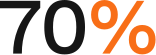
U.S. and Canadian companies can cut payroll costs by up to 70% through nearshore staffing in Mexico.

Cross-border recruiting has never been easier. Explore the global talent pool and unlock new opportunities for growth.

More companies now turn to Mexico for skilled professionals who deliver remote services and operational efficiency.

Businesses save up to 32% on cost per hire while gaining the flexibility to scale teams as needed.